Why 90% of AI features fail in SaaS and how you can be the 10% that wins

If you're a SaaS founder, CEO, or product leader, you've likely been asked the question:
"Where's your AI roadmap?"
And with good reason. AI is no longer optional. Over 90% of enterprise buyers expect AI-driven features in SaaS tools within the next two years [1].
Nearly half have already switched providers to get better AI capabilities [2].
But here's the uncomfortable truth: 90–95% of AI initiatives never make it into production [3][4]. They demo well, but collapse under real-world usage, require costly rebuilds, or become too expensive to maintain.

The gap between AI ambition and execution is where most SaaS teams get stuck
This gap between AI ambition and AI execution is where most SaaS teams get stuck. The winners will be the companies that not only launch AI features — but make them reliable, scalable, and value-driving in production.
At Hapli, we've seen this problem play out repeatedly. That's why we built the infrastructure to help SaaS teams move from AI experiment → production → expansion, without hitting the traps that kill 90% of projects.
The AI implementation trap
Despite billions in investment, AI initiatives fail at alarming rates. Here's why most experiments never make it past pilot:
1. Poor data quality and integration

- 42% of projects fail due to fragmented or inconsistent data pipelines [5].
- Even when an AI model works in a lab, scaling it across production environments breaks down without robust data governance [6].
- SaaS teams often underestimate how much work goes into cleaning, integrating, and monitor data sources before AI can add value.
- With Hapli: Teams can experiment with plug-and-play AI widgets without re-architecting their entire data layer first.
2. Talent shortages and skills gaps
- A third of organisations cite lack of skills as the top barrier to AI adoption [6].
- Most teams don't have both: deep ML expertise + product context. This leads to prototypes that don't survive real-world use.
- Without monitoring and lifecycle management talent, features often fail after launch.
- With Hapli: You don't need a 10-person ML ops team. We package deployment, monitoring, and compliance into the product layer, letting PMs and engineers focus on customer value, not infrastructure firefighting.
3. Chasing hype instead of solving real problems

- Eighty per cent of businesses admit that AI hasn't yet moved the needle on earnings, despite massive spending [7].
- Founders are pressured into shipping "AI for the press release," rather than addressing actual customer problems.
- Features demo well but don't drive measurable ROI, so they're abandoned.
- With Hapli: We've built our platform by working directly with SaaS builders to understand where AI features actually succeed — and where they fail. That's why Hapli includes capped pilots, built-in observability, and cost controls —the safeguards customers asked for. You can validate outcomes in production and scale only what delivers value, avoiding the "big bet → big disappointment" cycle.
4. Unpredictable and rising costs

- Infrastructure spending for AI-first companies now accounts for 35–40% of COGS [8].
- Costs balloon unpredictably because AI pricing is based on usage, not seat-based.
- Teams can't forecast spend, leading to surprise bills that kill ROI.
- With Hapli: We provide model routing and cost controls baked into deployment. We shift workloads across models, cap spend, and keep features predictable — even as you scale.
5. Governance and compliance gaps

- Only 4% of companies have a cross-functional AI compliance team [9].
- Regulations like the EU AI Act mean that compliance is no longer optional.
- Without proper controls, teams risk shipping features that create security, ethical, or regulatory blowback.
- With Hapli: Compliance isn't bolted on later; it's built into the layer. We provide audit logs, monitoring, and governance frameworks to ensure features remain safe, compliant, and enterprise-ready.
Why this matters for SaaS leaders
For SaaS executives, the failure to operationalise AI isn't just a technical hiccup it's a strategic risk.
- Miss AI, miss revenue: AI-first SaaS companies are growing 2.4x faster than peers [10].
- Customer pressure is accelerating: By 2028, 60% of SaaS apps without GenAI will be replaced [11].
- Investors are watching: With 64% of U.S. VC funding now flowing into AI [12], valuations are increasingly tied to credible AI execution.
In short: If your AI fails, your growth fails.
That's why the SaaS winners of the next decade won't just build AI features. They'll master the path from prototype to production to scale.
The path forward: from pilot to production
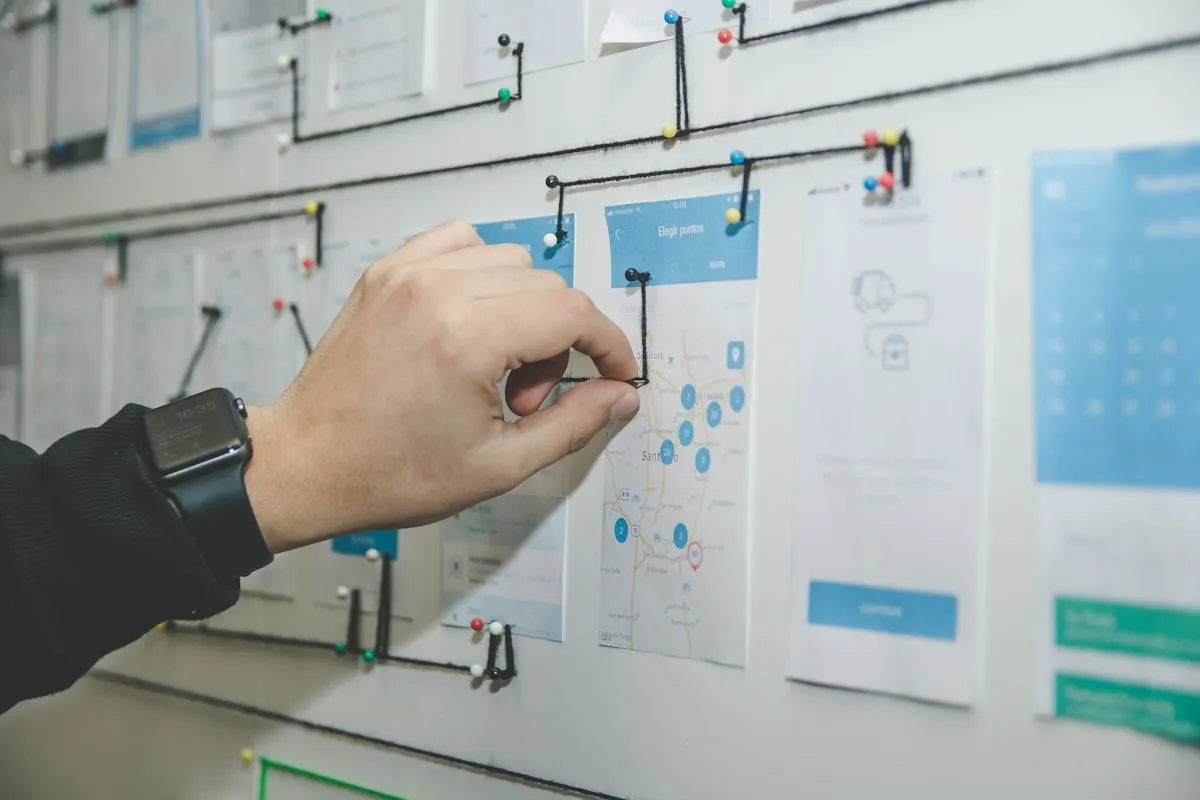
The journey from prototype to production requires careful planning and execution
From working with SaaS leaders, we've seen a typical progression:
Prototype
Ship fast, narrow use cases.
Pilot
Add caps, observability, and cost controls.
Production
Implement SLAs, governance, and compliance.
Expansion
Scale across accounts/features without costly rewrites.
The challenge? Most SaaS teams stall at step 2. They can ship a prototype, but they can't reliably take it to production.
That's where Hapli comes in.
- In Prototype, we provide plug-and-play AI widgets to launch features in days.
- In Pilot, we provide monitoring, usage controls, and routing for cost management.
- In Production, Hapli enables enterprise-grade reliability with SLAs and compliance.
- In Expansion, SaaS teams can scale confidently without re-architecting.
Companies that purchase specialised AI deployment infrastructure succeed twice as often as those that build it in-house [3]. Hapli gives SaaS builders the shortcut.
A SaaS use case: from demo to scale

AI-powered support assistants need proper infrastructure to scale effectively
Imagine you're a SaaS platform adding an AI-powered support assistant:
Without Hapli
- Prototype: You wire up GPT to answer FAQs. It demos beautifully.
- Pilot: Customers start using it. You hit cost spikes, inconsistent answers, and compliance questions.
- Production: You need observability (who's asking what?), SLAs (reliability guarantees), and auditability.
- Expansion: Now you want the assistant across customer success, sales, and integrations — without rewriting from scratch.
Most teams fail in Pilot. Costs spike, compliance red flags appear, and engineering stalls.
With Hapli
With Hapli, that same team can:
- Launch the bot in days.
- Hapli handles routing, cost caps, and monitoring.
- Be assured of enterprise compliance and reliability in Production.
- Expand the feature across functions without compromising its integrity.
How Hapli helps SaaS leaders win
With Hapli, SaaS founders, PMs, and engineers can:
- Experiment faster with plug-and-play AI widgets.
- Ship to production sooner with built-in SLAs, observability, and governance.
- Stay reliable at scale with model routing, cost controls, and compliance frameworks.
Our mission is to make Hapli the default layer for SaaS AI deployment because good AI features shouldn't fail just because there's no clear path from pilot to production.
Don't be the 90%
AI is no longer a differentiator — it's the new baseline in SaaS. The companies that win won't just launch AI features. They'll make them boringly reliable, cost-predictable, and value-driving for customers.
Most will fail. But you don't have to.
👉 Ready to move from prototype to production?
References
- [1] Revtek Capital – AI as baseline in SaaS (2025)
- [2] CFODive – buyers switching for AI features (2025)
- [3] Fortune – MIT: 95% of generative AI pilots fail (2025)
- [4] Times of India – 95% of firms see zero ROI from AI (2025)
- [5] Fivetran – nearly half of AI projects fail from data issues (2025)
- [6] SUSE – AI skills gap survey (2025)
- [7] Investment Central – AI ROI paradox (2025)
- [8] Forbes Tech Council – AI infra now 35–40% of COGS (2024)
- [9] AIMultiple – AI compliance challenges (2025)
- [10] LinkedIn Pulse – AI-first SaaS grows 2.4x faster (2025)
- [11] ProCreator – by 2028, 60% SaaS apps replaced if no AI (2025)
- [12] Reuters – AI investment bubble (2025)